Last weekend I was at a conference for book promotion and marketing. Which means I spent two days in a room full of book people — authors, publishers, marketers, the kind of crowd that shows up to the airport with three paperbacks in their carry-on just in case. And at this conference, as at all good conferences, there was a table of free books. Take what you want. Fill your bag. (Be still my heart!)
You’d think it was a feeding frenzy. It mostly was.
One of the speakers was a big deal. Made the New York Times list. Huge online following. Survived a traumatic brain injury as a kid and built an entire career teaching people how to learn faster in spite of their wiring. The audience loved him. I loved him. When he walked off that stage, every person in the room was primed to grab his book off the freebie table on the way out.
And I watched them walk right past it.
Free. Zero dollars. A book by a guy they’d just applauded. And these weren’t civilians — these were book people, professional readers, the easiest sell on planet Earth.
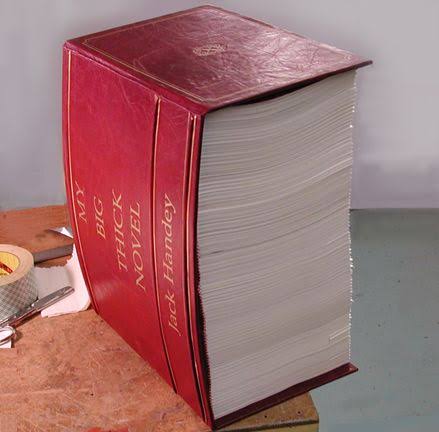
So I did what I always do, because watching what readers actually pick up is my idea of a spectator sport. I went over and looked at the thing. Four hundred and thirteen pages. “New and expanded” splashed on the cover. I flipped to the endnotes — pages and pages of bare citations, no notes, no nothing, just heft.
Here’s what happened, near as I can figure. The man hit the bestseller list. He earned his victory lap. And when the second edition came around, he did what every author on God’s green earth is dying to do: he put in everything. All the stuff that got cut the first time. The publisher stamped “expanded” on the cover like it was a selling point.
The readers took one look at that brick and kept walking.
I thought about that table this week while I was on a call with one of my authors. Her manuscript is deep in production, the copy editor’s sharpening her pencil, and my author — who has done heroic amounts of cutting already, I want that on the record — drew a line in the sand. Seventy-five thousand words felt too lean, she said. Eighty felt right. (that translates to about 320 pages, without the additional 60 pages of endnotes.)
So I asked her the question I ask everybody, including myself: “Tell me what your evidence is.”
Because “it feels right” is where every author starts, and it’s a lousy place to finish. Her evidence, to her credit, was real — she’d stacked her book against the comps on her shelf and done the math. That’s a conversation we can have. What I’m listening for is the other thing, the thing under the thing: I bled for these words and I want them all to live.
I know that feeling intimately. It is also, I’m sorry to report, completely beside the point.
The reader is the boss, and the reader is brutal. (See how I bolded this?)
Here’s what I told her. When an editor recommends a cut, she’s almost never saying this is bad. She’s saying this job has already been done. You made this point in chapter two. This story carries the same freight as the one before it. The reader got it the first time — and every time you do the job again, you’re not being thorough, you’re being repetitive, and the reader can feel the difference even if she can’t name it.
Same thing happens in marketing copy. The lines that always get cut? “I want you to know.” “You have to believe me.” “I really want this for you.” All that heartfelt throat-clearing. Not because caring is bad — because the caring is already baked into everything else on the page. Saying it out loud is doing a job twice.
At the end of the day, it’s her book. My job is to lay out the pluses and minuses and let her choose — and she’ll choose well, because she’s asking the right question now. Not how much of my work gets to stay? but how much does the reader need?
Those are different questions. The freebie table answers the second one every single time.
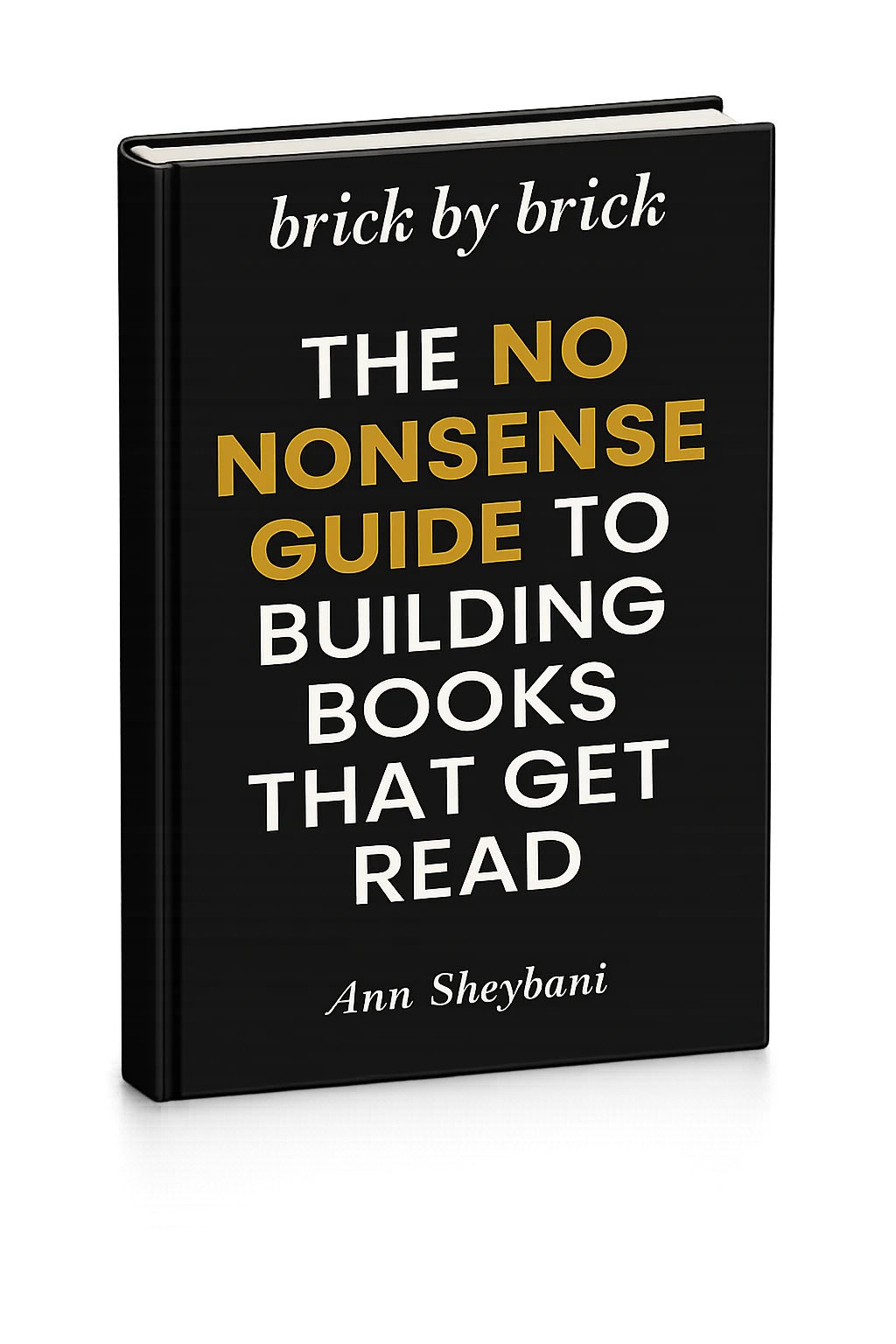
So before you fight for those extra five thousand words, picture your book on that table. Free. Your name on it. Your best material in it. And a stream of eager readers deciding, in half a second, whether to pick it up or keep walking.
Make it easy to pick up.