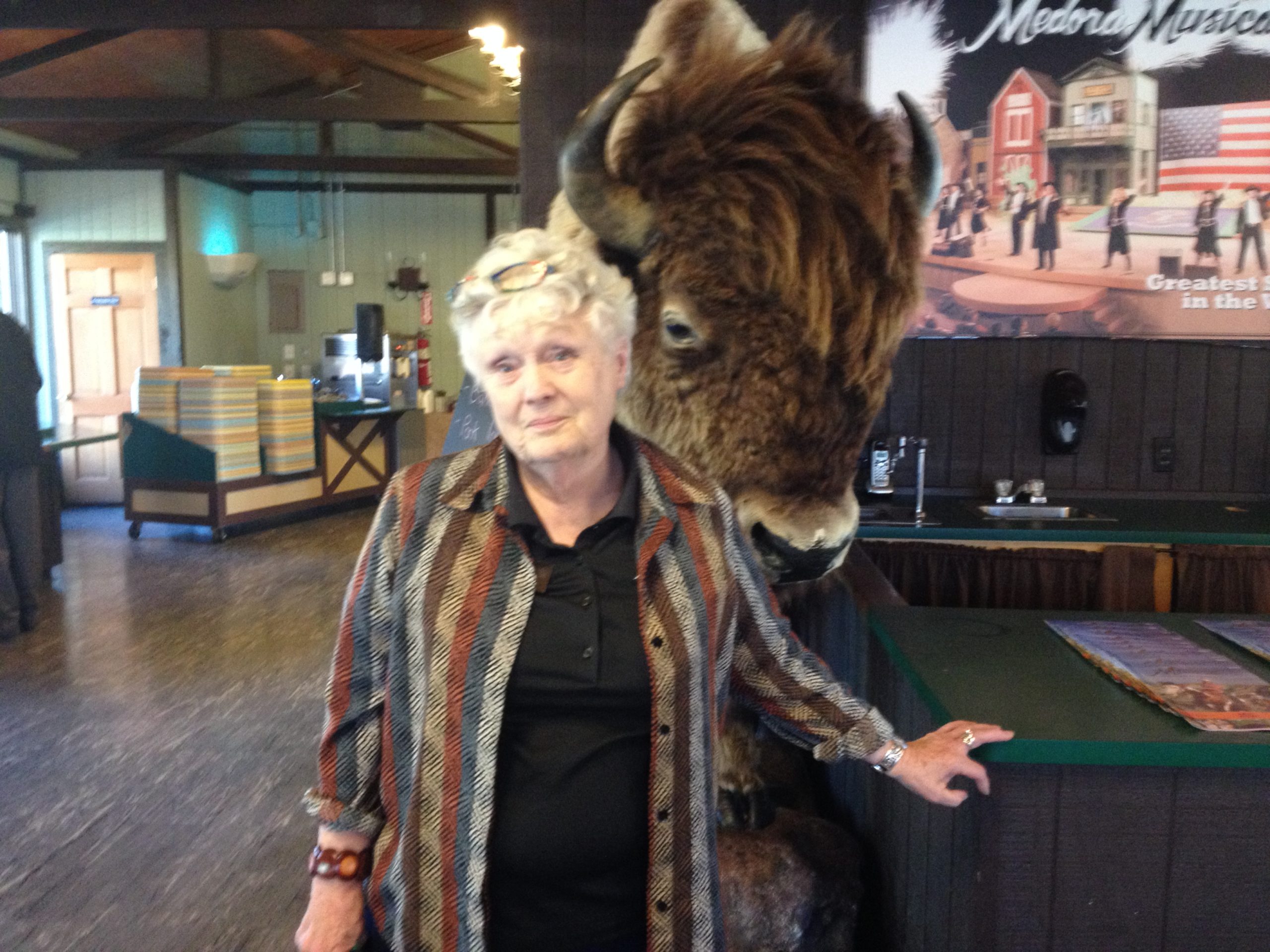
On Saturday I called my mother to check on her. She’s getting up there in age, and she’d been flat on her back for a couple of weeks. Zero appetite. Which, if you know my mother, is the part that should worry you. The woman has never met a casserole she couldn’t finish. Or a jar of mayonnaise.
I’d been after her to see her doctor. She complied — sort of. Got an appointment ten days out. Ten days. I remember shaking my head at that.Turns out the appointment was moot. Mom was already in the hospital, though it hadn’t occurred to call either my brother or me to mention that.
I asked what the doctors had found. She said something about a disc in her stomach. They were probably going to operate. Maybe today. Maybe tomorrow. Nurses sure seem sweet. La-di-da-di-da.
A disc. In her stomach.
In other words, she had no idea. And — this is the part that really got me — she wasn’t the least bit concerned. Some authority had taken the reins. She was just along for the ride.
Par for the course, honestly. The standard operating procedure in my family is this: wait and see. Someone else will make the decisions. And if you don’t look too closely, it doesn’t exist.
We follow the alcoholic rules. (The family inheritance nobody bothered to put in a will.)
Now, to be fair — chronic illness isn’t really our thing. With the exception of my dad, an alcoholic who died of a massive coronary at the ripe old age of sixty-two, we’re a sturdy bunch. Knock on every piece of wood in the house. But proactive? No. Proactive is not a trait we pass down.
All of this got me thinking about my friend Sherry Horton.
Sherry is the author of The Witness Chair. Besides being my partner in running a local writing workshop, she was part of my writers’ group. When I joined — the show already in progress — Sherry was beginning to build a memoir about her husband’s cancer and his death.
And as she read from those early drafts, I couldn’t stop marveling at how differently Sherry did this. How differently she handled a health scare. When her husband was diagnosed, she got online and researched the cancer. (Should I mention that Sherry is about ten years younger than my mother, and never once balked at learning a new piece of technology? I should. There it is.) She tracked every test result. Noted the healthy ranges. Watched for the dips and the spikes. She wrote out questions for the doctors. She researched best practices, best hospitals, best doctors — every variable a human being could possibly get her hands on.
I marveled at it. Her involvement. Her refusal to just sit there. Her insistence that she could, somehow, affect the outcome. (I can’t use the word marvel enough. Just can’t.) Because nobody in my family has ever operated like that. Not once.
But here’s the thing I actually want to tell you about. Watching Sherry build that memoir taught me as much about writing as it did about mindset. What she started with was not what she ended up with.
She started with journal entries. Lists and lists of biological markers. Questions. Notes on how her husband was responding to treatment, how she was feeling, what she was afraid of, what she was hoping for, what move they should make next. That was the raw material. And then — draft by draft — it fell away. A story emerged in its place. A through line. History. Characters. Scenes. Sensory detail. All the stuff that turns a record into a narrative moved to the front of the room.
And the whole time, Sherry kept asking one question about her own work: “Who wants to read another cancer story? Why would anybody care?”
She was right to ask it.
Because there are a million cancer stories out there. A million family-member suicides. Traumatic divorces. Incest-survivor tales. Trauma is very often the thing that drives a person to write in the first place — sit in any writing workshop and you’ll see that’s true within the first ten minutes.
So the trauma is not the book. The trauma is just the reason you finally sat down.
When Sherry decided to find a publisher, she did what Sherry does. She researched. And she found a house that favored books with a link to art.
Now. Sherry’s husband had been an artist. For one installation, he’d created a series of chairs representing the Salem Witch trials. So Sherry wove that in. She took their cancer journey and interlaced it with the project that had meant so much to her husband — a project that also happened to mirror her own experience precisely. Sitting as a witness. To something she could not control.
That’s not a journal entry. That’s a book.
So if you take anything from this — beyond, you know, let’s all try to be a little more proactive about our own lives, shall we — let it be this: What you start out with is not the thing you publish. It’s the raw material. It’s the ore, not the ring.
It takes draft after draft after draft to get at the heart of the matter. And to make your story matter to a reader, you have to do it in order. First you make sense of the thing for yourself. Then you shape it. You find the twist, the angle, the chair nobody else would have thought to put in the room. You make it bigger than the facts of what happened to you.
We need to see you in it. And we need to understand what the hell it has to do with us. That’s the work. Nobody gets to skip it.
Anyway. I’m going to go call my mother back. She’s home now. No doubt taking the “supplements” her doctors gave her instead of a surgical experience.
Go figure.
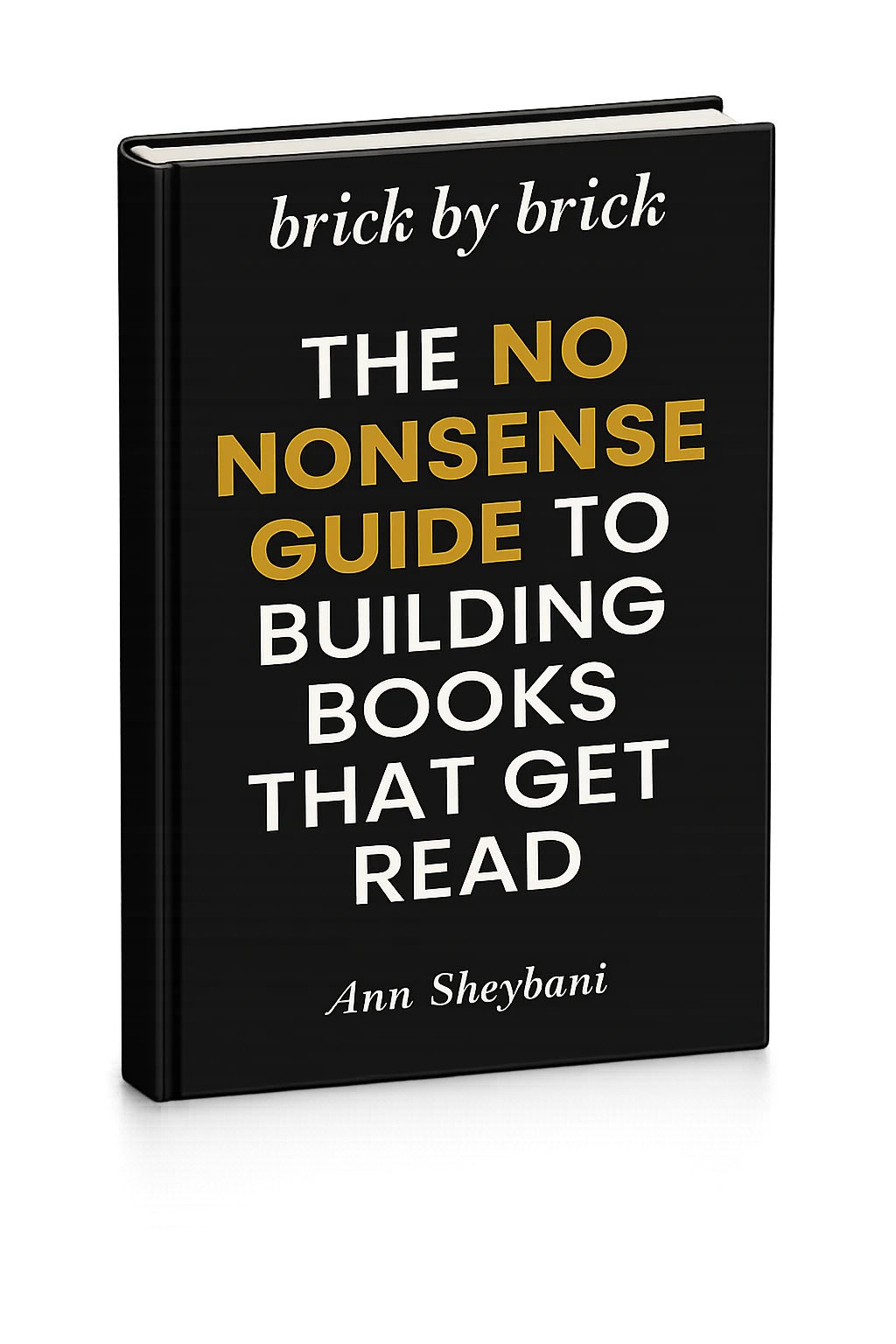
P.S. If you’ve got a folder somewhere — journal entries, voice memos, a Google Doc ominously titled THE BOOK that is, if we’re honest, just a pile of everything that happened to you —that’s not a failure. That’s the ore. The trouble only starts when you mistake the ore for the ring. Brick by Brick: The No Nonsense Guide to Building Books That Get Read is about exactly this — the unglamorous, draft-after-draft work of turning what happened to you into something a stranger actually wants to read.